Choosing between engineered and solid hardwood flooring is one of the most common decisions homeowners face. Both are real wood products. Both look beautiful underfoot. But they differ in how they’re built, how they handle moisture, and how long they last.
The global wood flooring market is valued at USD 5,455.32 million in 2026 and is projected to reach USD 7,645.82 million by 2035. This growth tells you one thing: homeowners everywhere are still betting on real wood. The real question isn’t which type is “better.” It’s which one is better for you, your space, your climate, and your budget.
What Is Solid Hardwood Flooring?
Solid hardwood flooring is made from a single piece of natural timber with no layers or composite materials. Each plank is real wood throughout, offering unmatched authenticity and the ability to be refinished multiple times over its lifespan.
How It’s Made?
Each plank is milled from one species of timber. Typical thickness runs around ¾ inch, and planks are cut with tongue and groove edges so they lock tightly together during installation. There are no layers, no composites, just solid wood throughout.
Key Characteristics
- Expands and contracts naturally with changes in humidity
- Can be sanded and refinished up to 10 times over its lifespan
- Installed using nail-down methods over wooden subfloors
- Available in a wide range of domestic and exotic species
- Lifespan of 50 to 100+ years with proper maintenance
Typical Use Cases
Solid hardwood works best in:
- Main living areas, like living rooms and dining rooms
- Upper floors with wooden subfloors
- Long-term family homes where you want decades of use
- Restoration projects in older houses that need period-appropriate flooring
What Is Engineered Hardwood Flooring?
Engineered hardwood flooring is a real wood product made with a genuine hardwood surface layer bonded to a plywood or HDF core. This layered construction gives it greater dimensional stability than solid wood while maintaining the same natural appearance.
How It’s Made?
The top layer is genuine hardwood, typically 2mm to 6mm thick. Beneath it sits a core made of plywood or high-density fiberboard (HDF), arranged in 3-ply, 5-ply, or multi-ply constructions. These cross-layered cores resist warping far better than solid wood alone.
Key Characteristics
- Superior dimensional stability in changing humidity
- Available in wider plank options without warping risk
- Comes prefinished from the factory for faster installation
- Can be installed over concrete slabs and radiant heating systems
- Supports multiple installation methods: glue, float, nail, or click-lock
Typical Use Cases
Engineered hardwood shines in:
- Basements and below-grade spaces
- Condos with concrete subfloors
- Modern wide-plank designs
- Rooms with moderate humidity fluctuations
Quick Comparison Overview
Sometimes a side-by-side view makes the decision clearer. Here’s how the two stack up across the features that matter most.
Side-by-Side Feature Table
| Feature | Solid Hardwood | Engineered Hardwood |
| Construction | Single piece of wood | Real wood layer over plywood/HDF core |
| Refinishing | Up to 10 times | 1 to 3 times (depends on wear layer) |
| Moisture Resistance | Low | Moderate |
| Lifespan | 50 to 100+ years | 20 to 50+ years |
| Average Cost | $5 to $15 per sq ft | $3 to $13 per sq ft |
| Installation | Nail down | Glue, float, nail, or click-lock |
Look and Style
When it comes to appearance, these two are closer than most people expect. The real differences show up in plank sizing and format options.
Species, Colors, and Finishes
Both solid and engineered hardwood offer the same species options: oak, walnut, maple, hickory, and many exotics. Color choices range from pale natural tones to deep, hand-scraped finishes. You won’t sacrifice aesthetics with either option. Once installed, most guests can’t tell the difference.
Plank Sizes and Formats
Solid hardwood typically comes in narrower widths, usually between 2¼ and 5 inches. Engineered hardwood can go much wider, sometimes up to 9 or even 12 inches, without the warping risk. If you want that modern, wide-plank farmhouse look, engineered is the more practical choice.
At Rustic Wood Floor Supply, we carry both solid and engineered hardwood in a wide range of species, widths, and finishes. Browse our collection to find the exact look your home deserves!
Performance and Durability
How well a floor holds up over the years depends on species, finish, and how much refinishing room you have. Here’s how both options compare in daily life.
Everyday Wear and Scratches
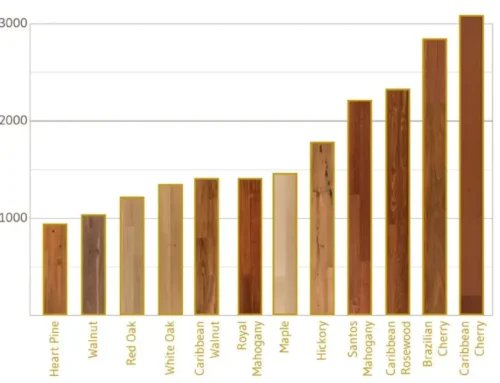
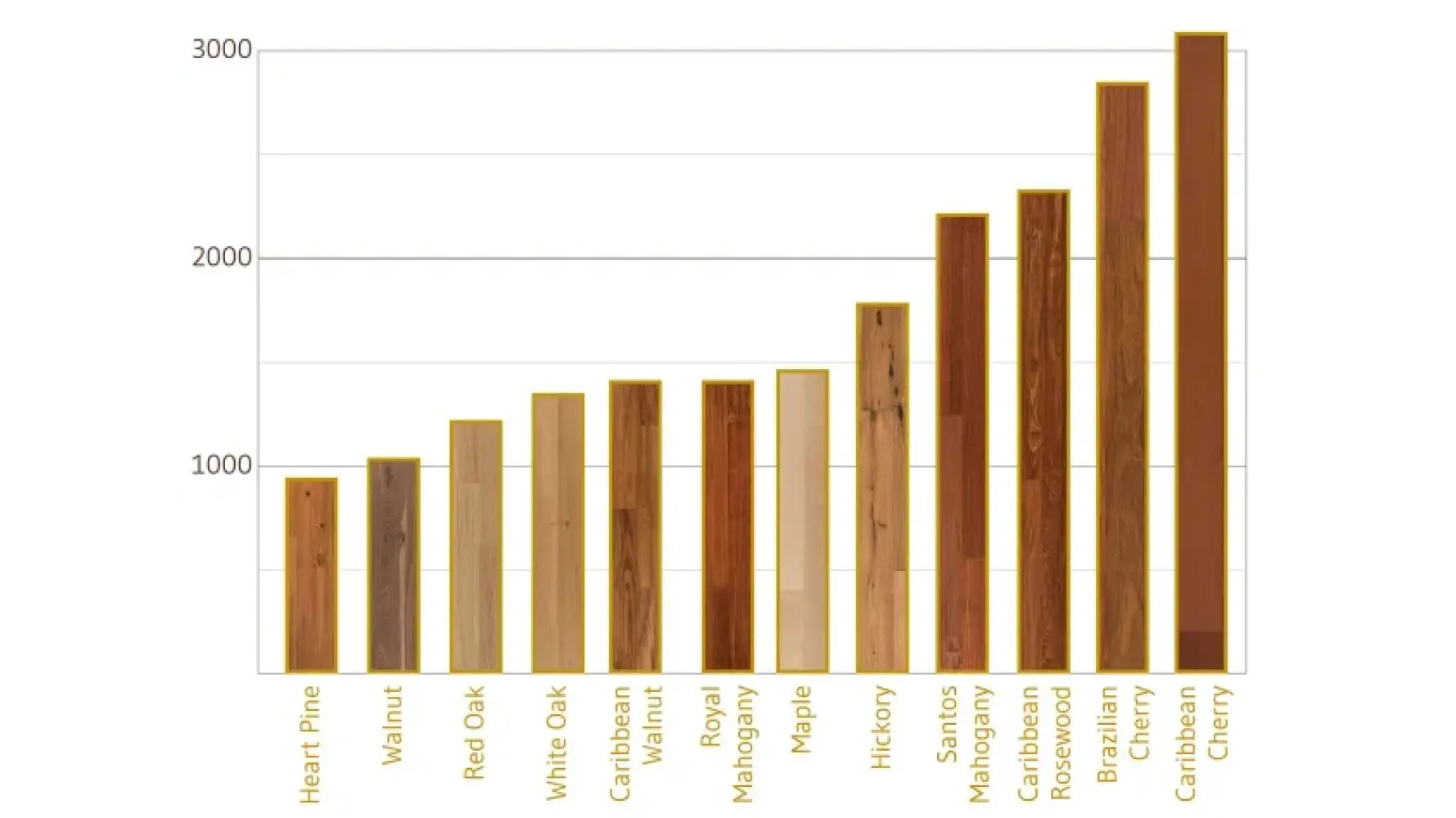
Both types perform similarly against daily foot traffic, pet nails, and furniture movement. Scratch resistance depends more on the wood species and finish than on whether the floor is solid or engineered. Harder species like hickory and maple hold up better than softer ones like pine.
Refinishing and Lifespan
Solid hardwood wins on longevity. You can sand it down and refinish it many times, which means it can last a century in the right conditions. Engineered hardwood can be refinished one to three times, depending on the thickness of the wear layer. A thicker wear layer (4mm or more) gives you more flexibility.
Moisture and Climate
This is where the two types differ the most. If your space deals with humidity swings or sits below grade, this section matters a lot.
Humidity and Temperature Movement
Solid hardwood is sensitive to moisture. In areas with big seasonal humidity swings, planks can gap in winter and cup in summer. Engineered hardwood handles these shifts far better thanks to its cross-layered core.
Basements, Kitchens, and Heated Floors
Can you install hardwood in a basement? Solid hardwood is generally not recommended below grade. Engineered hardwood, however, performs well in basements, kitchens, and over radiant heat systems. Its layered construction resists the moisture and temperature changes common in those spaces.
Cost and Value
Budget plays a big role in any flooring decision. But the upfront price tag doesn’t always tell the full story.
Material and Installation Costs
Solid hardwood generally costs $5 to $15 per square foot for materials alone. Engineered hardwood ranges from $3 to $13 per square foot. Installation costs are often lower for engineered floors because they support floating and click-lock methods, which require less labor.
Long-Term Value and Resale
Both options add strong resale value to a home. Solid hardwood often carries a slight edge with buyers because of its reputation and refinishing potential. That said, high-quality engineered hardwood from a trusted supplier holds its value well, especially in markets where buyers expect modern, wide-plank styles.
Bottom Line
There’s no universal winner here. Solid hardwood is the go-to for above-grade rooms in stable climates where you want a floor that lasts generations. Engineered hardwood is the smarter pick for basements, concrete subfloors, radiant heat, and wide-plank designs that need dimensional stability. Your best choice depends on where you’re installing, what look you want, and how much flexibility you need from your floor.
Every great room starts from the ground up. Rustic Wood Floor Supply brings you hand-selected solid and engineered hardwood sourced for quality, durability, and real character. Quality you can see, durability you can count on, and a selection wide enough to match any vision.
Explore our curated collection today and get flooring that fits your home, your style, and your life.
Author Profile
- I have worked in hardwood flooring for the last 8 years. Use to run a company of residential crews as well as a company with gym flooring. If you need floor installation or refinishing help, I should have an answer or at least get you in the right direction.
Latest entries
 Hardwood FlooringFebruary 27, 2026Benefits of Engineered Wood Flooring
 Hardwood FlooringFebruary 26, 2026Guide on Average Length of Hardwood Flooring
 Hardwood FlooringFebruary 24, 2026Laminate vs Solid Hardwood Flooring: Comparison Guide
 Hardwood FlooringFebruary 20, 2026Engineered Vs. Hardwood Flooring – Comparison Guide