Solid hardwood has been the default choice for decades, and for good reason. But not every space, subfloor, or budget lines up with what solid wood demands. Basements are below ground, so moisture can cause solid wood to swell and warp. Concrete floors cannot handle nail-down installs, and heated rooms need flooring that can handle temperature changes without leaving gaps. These are the situations where solid hardwood reaches its limit, and homeowners start looking for something that delivers the same look without the same restrictions.
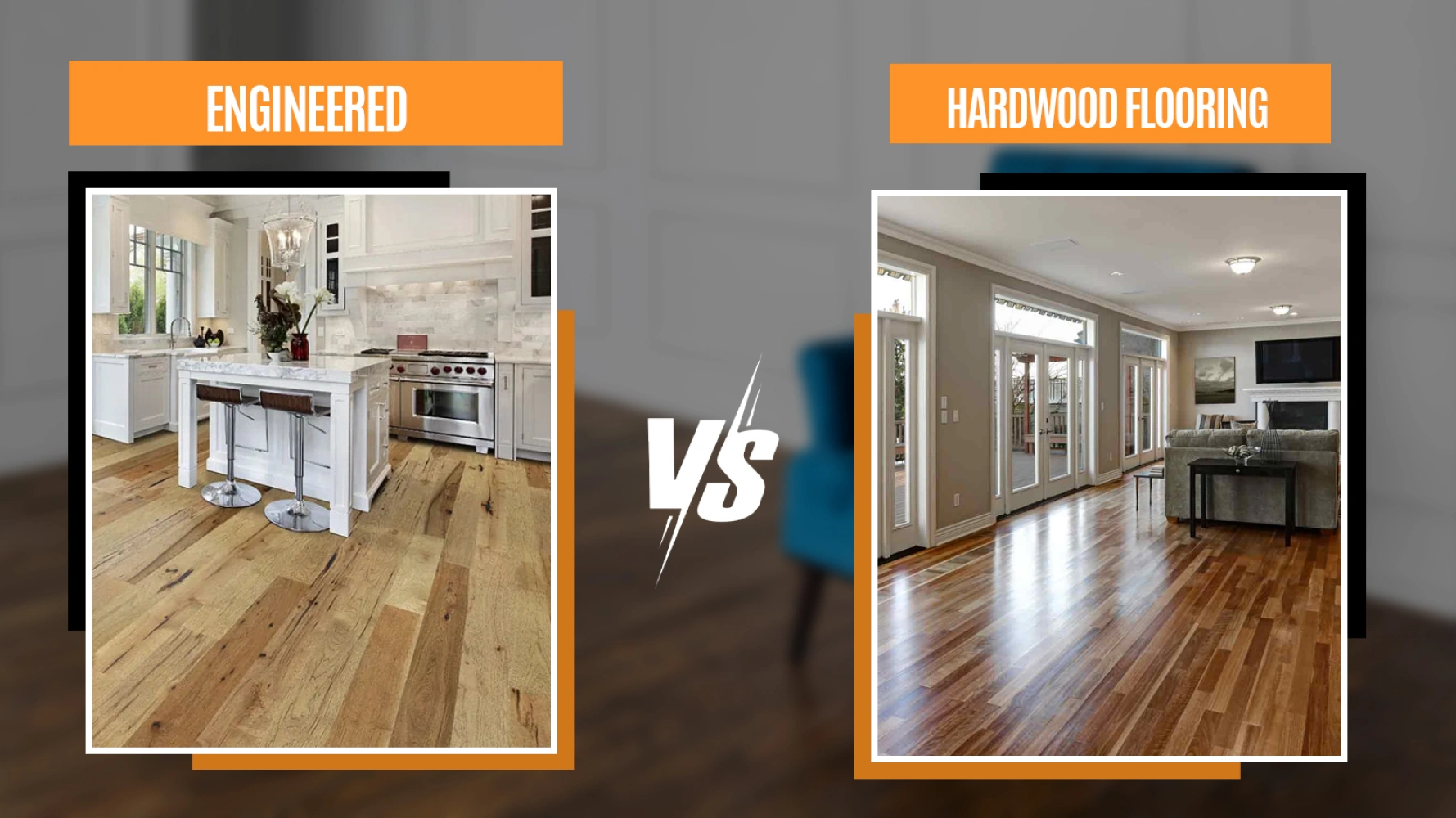
Engineered wood flooring was built to fill that gap. A real hardwood veneer sits on top of a layered plywood or HDF core that manages moisture, temperature, and structural movement better than a solid plank ever could. The surface looks identical to solid hardwood. The difference is what happens underneath it.
1. Real Wood Surface With Better Structural Stability
Engineered boards are built in layers with each one running in a different direction. This cross-grain construction resists the expansion and contraction that causes solid planks to gap in dry winters and cup in humid summers.
The top layer is real hardwood, the same species and grain found on a solid plank:
- Oak
- Walnut
- Hickory
- Maple
The alternating plywood layers underneath create dimensional stability that allows the floor to handle climate swings without the seasonal movement solid wood is known for. This matters most in regions with wide temperature and humidity ranges, which is exactly the kind of climate our customers in Spokane, Boise, and Atlanta deal with year-round.
2. Installs Where Solid Hardwood Cannot
Solid hardwood needs to be nailed or stapled into a wooden subfloor, which rules out concrete slabs, basements, and any space where plywood is not present or practical. Engineered wood flooring opens up every room in the house with three installation methods:
- Nail down over plywood subfloors
- Glue-down directly onto concrete
- Floating installation over virtually any flat, stable surface
This flexibility is why engineered hardwood has become the standard choice for basement renovations, slab-on-grade construction, and multi-story buildings where subfloor conditions change from one level to the next.
Quick Check
Glue-down engineered installations over concrete produce less sound transfer between floors than any other hardwood installation method. That makes it the preferred option for condominiums and multi-level commercial spaces where noise control matters.
3. Handles Moisture Better Than Solid Wood
Wood and water naturally don’t mix, but engineered construction manages moisture exposure significantly better than a single solid plank. The layered core resists swelling because each layer counteracts the movement of the one beside it.
This does not make engineered wood waterproof, but it does mean the floor tolerates:
- Humidity fluctuations between seasons
- Minor kitchen spills and splashes
- Ambient moisture in below-grade spaces
A solid board in those same conditions would warp, buckle, or develop permanent cupping that requires sanding to correct.
4. Compatible With Radiant Heating Systems
Radiant heat pushes warmth up through the subfloor, and that constant low-level heat cycling causes solid wood to dry out, shrink, and develop gaps over time. Engineered boards handle it far better because the layered core distributes thermal stress across multiple layers rather than concentrating it in a single piece of wood.
Most engineered products carry a manufacturer’s rating for radiant heat, though specifications vary by brand. We carry radiant-compatible options from several manufacturers at Rustic Wood Floor Supply, and our staff matches the right product to the specific system based on heat output and subfloor construction.
Pro Tip:
Acclimate the flooring in the room with the radiant system running at normal operating temperature for at least 72 hours before installation begins. This prevents gapping after the floor is locked in place and the system cycles through its first full heating season.
5. Faster and Less Disruptive Installation
Solid hardwood installations require sanding, staining, and multiple coats of finish applied on-site. That process takes days, fills the space with dust and fumes, and keeps the room out of use until the finish cures fully.
Prefinished engineered wood flooring arrives ready to walk on the same day it goes down. The factory-applied finish is harder and more consistent than anything brushed or rolled on-site, and installation moves faster because there is no waiting between coats. A room that would take a week with unfinished solid hardwood can be completed in a day or two with prefinished engineered boards.
6. Wide Range of Species, Widths, and Finishes
Engineered construction is available in every popular species and in plank widths ranging from traditional 3-inch strips to wide planks over 7 inches. Finish options include:
- Matte and satin
- Wire-brushed and hand-scraped
- Smooth factory finish
This variety lets homeowners achieve their desired look without sacrificing performance. A homeowner who wants wide-plank walnut in a below-grade family room can actually have it, which is not possible with solid walnut over a concrete slab.
Did You Know?
Homes with hardwood flooring sell faster and at higher prices than comparable homes without it. Engineered hardwood delivers the same visual appeal and resale value as solid wood while working in spaces where solid wood cannot be installed at all.
7. Long-Term Value at a Lower Entry Cost
Engineered hardwood generally costs less per square foot than the same species in solid form, and installation savings add up further when sanding, staining, and on-site finishing are removed from the project scope. The top veneer can be refinished at least once or twice, depending on thickness, which extends the floor well beyond 20 years with proper maintenance.
For contractors buying in volume, the cost difference between solid and engineered adds up fast across a multi-room project. We offer wholesale pricing with volume discount tiers at Rustic Wood Floor Supply, and every order ships directly from the manufacturer or moves through our delivery network.
Can engineered wood flooring be refinished like solid hardwood?
It depends on the thickness of the top veneer. Most quality engineered wood flooring products have a veneer between 2mm and 6mm, which allows one to three sandings over the life of the floor. Thicker veneers offer more refinishing cycles, so checking the spec sheet before purchasing is worth the extra minute for anyone who wants long-term flexibility.
Is engineered hardwood a good choice for kitchens?
Engineered hardwood performs well in kitchens because of its improved moisture resistance compared to solid wood. Spills should still be wiped up promptly and standing water avoided, but the layered core handles the daily humidity and occasional splashes that come with kitchen use far better than a solid plank would in the same spot.
Final Word
Engineered wood flooring gives homeowners and contractors the look of real hardwood with structural performance that handles moisture, temperature shifts, and subfloor conditions that solid wood cannot. It installs faster, works in more spaces, costs less per square foot, and still carries the resale value while maintaining the natural look and appeal of real wood. That’s why many builders and contractors now prefer wholesale flooring options that deliver both quality and value for large projects.
At Rustic Wood Floor Supply, we have been helping contractors and builders choose the right engineered products for over 13 years. Our experts work with each buyer to match species, width, and finish to the specific project rather than pushing whatever needs to move off the shelf. The contractors who keep ordering from us come back because the product shows up as promised, and the pricing stays honest at wholesale. The people answering the phone also know the difference between what looks good on a spec sheet and what actually holds up on the job site.
Author Profile
- I have worked in hardwood flooring for the last 8 years. Use to run a company of residential crews as well as a company with gym flooring. If you need floor installation or refinishing help, I should have an answer or at least get you in the right direction.
Latest entries
 FlooringMarch 21, 2026What Is Vinyl Flooring and How Is It Made?
 FlooringMarch 21, 2026How Laminate Flooring Is Made: Layers, Core, and Wear Protection
 FlooringMarch 21, 2026Laminate Flooring Vs. Hardwood Flooring: Comparison Guide
 FlooringMarch 21, 2026What Makes Vinyl Flooring Ideal For Bathrooms?