Over the past few years, vinyl flooring has become one of the most popular choices for homes and businesses. It combines style with practicality, offering realistic designs without the high cost or maintenance of natural materials. However, not all vinyl floors are the same. A floor’s layers, materials, and construction determine how it performs in everyday use. Understanding how vinyl flooring is built helps you choose a product that looks good and performs well over time.
What Vinyl Flooring Is
Vinyl flooring is a synthetic flooring material made mainly from PVC (polyvinyl chloride). It’s designed to mimic the look of real materials like wood, stone, or tile, while being durable, water-resistant, and easy to maintain. PVC on its own is rigid and brittle, so manufacturers blend it with other materials to make it workable:
- Plasticisers to add flexibility
- Stabilisers to help it handle heat and light
- Fillers to give it density and structure
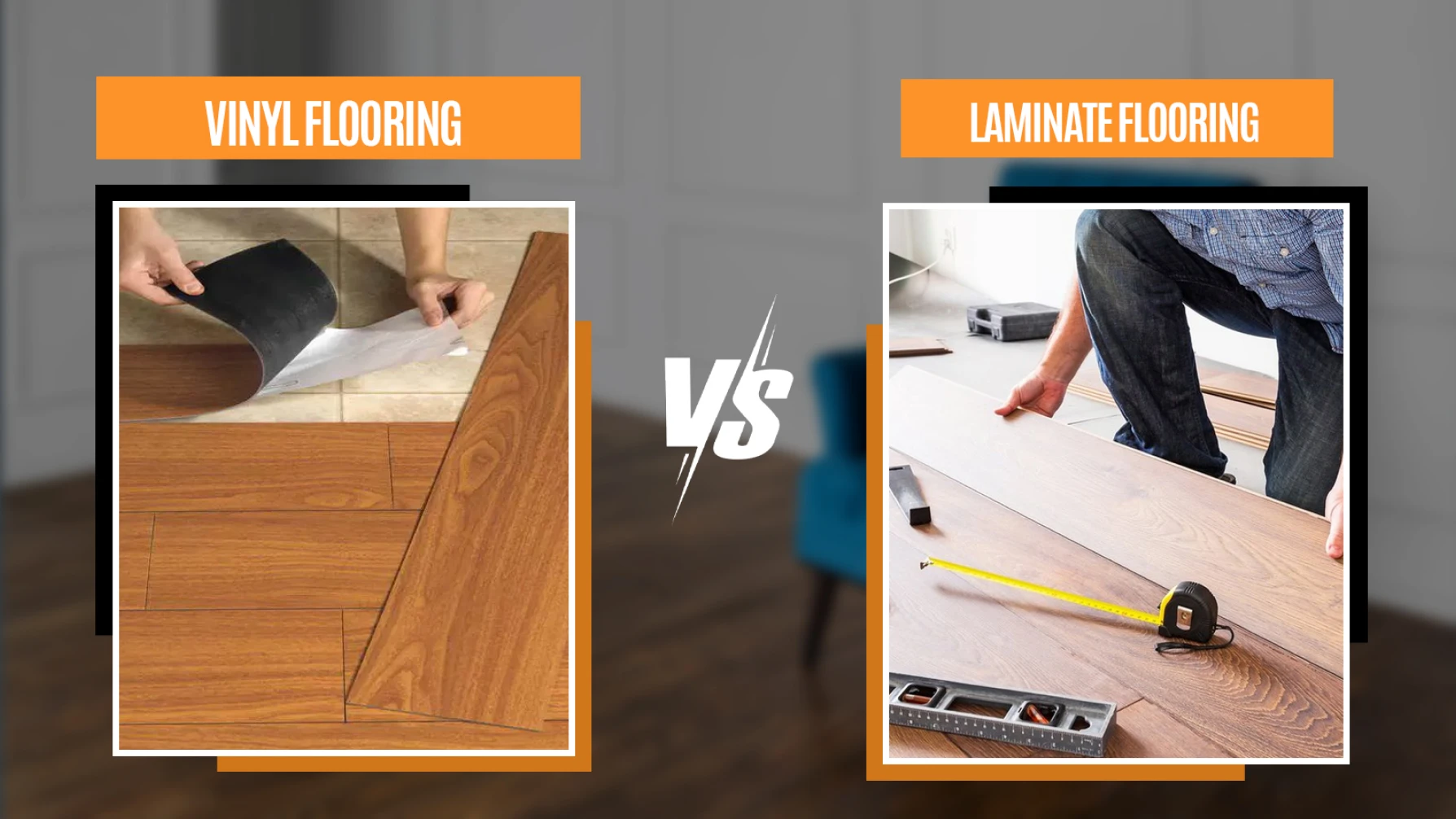
The result is a durable flooring material that resists moisture and reproduces the appearance of wood, stone, or tile. It is not the same as laminate, which uses an HDF core that swells when moisture gets in. Vinyl remains moisture-resistant because its core is fully synthetic, while traditional laminate uses a fiberboard core that can swell if water penetrates the surface.
The Main Types of Vinyl Flooring
Not all vinyl flooring is built the same way, and the type you choose determines where it can be used.
Luxury Vinyl Plank (LVP)
The most popular luxury vinyl flooring today, LVP comes in plank and tile formats designed to mimic hardwood, stone, or ceramic. Its multi-layer construction makes the difference between a product that performs well and one that only looks good on paper.
Sheet Vinyl
Available in continuous rolls with no seams, sheet vinyl keeps water out more effectively. This makes it a good option for bathrooms and laundry rooms where water exposure is common.
Rigid Core Vinyl
Rigid core vinyl uses a hard composite core instead of flexible PVC. This adds stability underfoot, reduces expansion and contraction from temperature changes, and works well over uneven subfloors.
How Vinyl Flooring Is Made
The core forms the structural foundation of the plank and plays a major role in stability and durability. In standard flexible LVP, the core is made from PVC blended with plasticisers for flexibility and cushioning. In rigid core products, the core takes one of two forms:
- WPC (Wood Plastic Composite): A foamed core made from PVC combined with wood-based or polymer fillers to create a softer, lighter structure.
- SPC (Stone Plastic Composite): A core made from limestone powder and PVC pressed together at high density. It handles temperature fluctuations better and suits commercial environments or spaces with underfloor heating more reliably than WPC.
What the core determines:
- How stable the floor feels underfoot
- How well it handles temperature changes
- Whether it can go over an uneven subfloor
- How much sound does it absorb when walked on
Did You Know?
SPC rigid core vinyl typically reaches a density of 2.0 g per cubic centimetre or above, making it one of the most dimensionally stable flooring products available. That density is why SPC holds its shape in environments where temperature swings would cause flexible vinyl to expand and buckle.
Not sure whether WPC or SPC fits your project? Our team at Rustic Wood Floor Supply works through exactly that with every contractor before an order is placed. We carry full specifications for every product on our shelves and match the core type to the environment first.
Talk to Our Team Before You Order.
The Decorative Layer
Above the core sits a printed layer carrying a high-resolution image of wood, stone, or tile. This is what the eye sees, and the quality of this layer is what makes or breaks the visual result.
Better manufacturers print from images taken directly from real wood and stone samples. The grain lines, colour variation, and natural character come from actual material rather than a generated pattern. That difference shows clearly in natural light and at close range.
Popular options include:
- Oak and wide plank wood look
- Walnut and hickory grains
- Marble and natural stone patterns
- Concrete and slate finishes
Quality vinyl lines up the surface texture with the printed image beneath it, a process called embossed in register. Budget products press a generic texture across the surface regardless of what is printed below, and once the floor is down and light hits it from a low angle, that mismatch is immediately obvious.
The Wear Layer
The wear layer sits on top of the decorative print and takes all the daily punishment, so the image underneath stays intact.
It is made from clear PVC reinforced with urethane coatings. Its thickness is the single most reliable indicator of how long the floor keeps its appearance.
Wear layer thickness by use:
- Budget residential: 6 mil to 8 mil
- Standard residential: 12 mil
- Heavy residential and light commercial: 20 mil
- Commercial: 28 mil and above
A retail floor with constant customer traffic needs 28 mil. A bedroom in a low-traffic home works fine with 12 mil. Putting a 6 mil product into a commercial space produces a floor that looks worn before the first year is over.
Pro Tip: Always confirm the wear layer measurement in mil when comparing products, because some manufacturers list overall thickness in ways that include the backing rather than just the protective surface layer.
The Backing Layer
The backing is the bottom layer of the plank. Its job is to provide stability and grip against the subfloor.
Some products include a pre-attached underlayment as part of the backing. That underlayment softens the feel underfoot and reduces sound transmission between floors. In products without it, a separate underlayment is recommended before installation, particularly in multi-storey buildings where noise between levels is a concern.
Is vinyl flooring fully waterproof?
The planks themselves are waterproof because PVC does not absorb water. The area to watch is the seams between planks, where water can work its way down to the subfloor if left standing. Sheet vinyl eliminates that risk because it has no seams across the surface.
Can vinyl flooring go over an existing floor?
Yes, in most cases. Vinyl can go over existing tile, concrete, or smooth hardwood as long as the surface is flat, clean, and structurally sound. High spots and dips transfer through to the finished surface over time, so levelling the subfloor before installation is always worth doing properly.
Bottom Line
Vinyl flooring works best when the right product meets the right space. The core gives it strength, the design layer adds character, the wear layer protects that look, and the backing keeps everything stable. If any layer is too thin or poorly made, the floor may show wear or stability issues sooner than expected.
At Rustic Wood Floor Supply, we source directly from manufacturers so every product meets the standard. Contractors keep coming back because our floors perform exactly as promised, and pricing stays honest at wholesale. Our team knows the difference between a floor that looks good on paper and one that truly holds up under real use.
Author Profile
- I have worked in hardwood flooring for the last 8 years. Use to run a company of residential crews as well as a company with gym flooring. If you need floor installation or refinishing help, I should have an answer or at least get you in the right direction.
Latest entries
 FlooringMarch 21, 2026What Is Vinyl Flooring and How Is It Made?
 FlooringMarch 21, 2026How Laminate Flooring Is Made: Layers, Core, and Wear Protection
 FlooringMarch 21, 2026Laminate Flooring Vs. Hardwood Flooring: Comparison Guide
 FlooringMarch 21, 2026What Makes Vinyl Flooring Ideal For Bathrooms?