The flooring in a gym does more than cover the ground. It determines how athletes perform, how safe the surface is under pressure, and how much the facility spends on maintenance over time. Solid hardwood, engineered hardwood, and luxury vinyl plank (LVP) are the three most performance-tested options used in schools, fitness centers, and multi-purpose athletic facilities across the US.
What Makes Gym Flooring Different from Regular Flooring?
Gym flooring carries performance requirements that standard residential or commercial flooring simply does not. A surface that looks fine in a living room can fail under the demands of a working gymnasium.
Here is what gym flooring must deliver:
- Durability under constant, high-impact daily use
- Slip resistance to keep athletes safe during fast directional changes
- Shock absorption to reduce joint stress over long training sessions
- Consistent ball response for court sports like basketball and volleyball
- Compatibility with sport-specific finishes and court line paint
Every flooring type covered in this guide meets these standards at different performance levels and price points. Understanding those differences is what makes the choice straightforward.
Solid Hardwood Gym Flooring
Solid hardwood is the standard for professional gymnasiums, school basketball courts, and competitive athletic facilities across the US. It is manufactured from a single piece of wood and delivers the durability, ball response, and long-term refinishability that no other gym flooring material matches.
Maple is the most widely used species. Its tight grain structure, consistent density, and hard surface make it the preferred choice for competitive play. The Maple Flooring Manufacturers Association (MFMA) sets the performance standards that most professional and collegiate gym floors are built to meet.
Unfinished Solid Hardwood
Unfinished solid hardwood arrives raw and is sanded, sealed, and finished on-site after installation. This gives gym managers full control over the finish type, sheen level, and court line placement.
Pros:
- Custom finish selection, including oil-based and water-based options
- Can be fully refinished multiple times over decades of use
- Ideal for new construction or complete gym floor replacements
Cons:
- Longer installation timeline due to the on-site finishing process
- Requires controlled humidity and temperature during and after installation
- Demands professional sanding equipment and certified finishing products
Best for: New gymnasium builds, school basketball courts, and facilities where a fully customized surface is the priority.
Prefinished Solid Hardwood
Prefinished solid hardwood carries a factory-applied finish before it arrives on-site. Installation is faster because the sanding and finishing stages are completed off-site before delivery.
Pros:
- Significantly faster installation with less facility downtime
- Uniform factory finish applied consistently across every plank
- The gym is ready for use sooner after installation is complete
Cons:
- Less on-site customization for finish type or sheen
- Factory beveled edges can create visible seams under direct or angled lighting
Best for: Gym renovations where minimizing downtime and returning the facility to use quickly are the top priorities.
Engineered Hardwood Gym Flooring
Engineered hardwood is constructed from a real wood veneer bonded over multiple layers of cross-stacked plywood or high-density fiberboard (HDF). It looks identical to solid hardwood from the surface, but handles moisture and subfloor conditions more effectively.
This structural difference makes engineered hardwood a strong option for gyms in humid climates, facilities built over concrete subfloors, or spaces where the environmental conditions make solid hardwood less practical.
How Engineered Hardwood Differs from Solid Hardwood?
The core distinction comes down to dimensional stability. Engineered hardwood expands and contracts less in response to humidity and temperature changes than solid hardwood does. This reduces the risk of warping, cupping, or gapping in gym environments where climate control is inconsistent.
Key differences at a glance:
- Engineered hardwood installs directly over concrete subfloors, where solid hardwood cannot
- Its real wood veneer is thinner, limiting refinishing to one or two cycles over its lifespan
- It is generally more affordable than solid hardwood while maintaining a genuine wood appearance and feel
Pros and Cons of Engineered Hardwood for Gyms
Pros:
- Real hardwood surface with greater moisture resistance than solid hardwood
- Compatible with radiant heat systems installed beneath the subfloor
- More budget-friendly than solid hardwood with comparable visual quality
Cons:
- Fewer refinishing cycles available compared to solid hardwood
- Not suitable for heavy free-weight areas or zones with repeated high-impact drops
- Wear layer thickness varies by product, directly affecting long-term durability
Best for: Multi-purpose fitness studios, aerobic rooms, dance studios, and facilities located in high-humidity regions or built over concrete subfloors.
Luxury Vinyl Plank (LVP) Gym Flooring
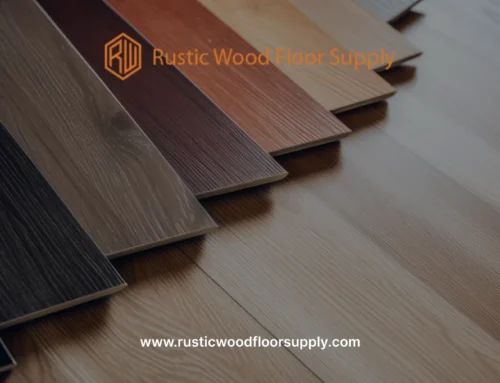
Luxury vinyl plank is a synthetic flooring product engineered to replicate the appearance of hardwood while delivering superior resistance to moisture, scratches, and heavy daily use. It is constructed from multiple fused vinyl layers and requires no sanding, refinishing, or court-specific finishing products throughout its lifespan.
LVP is increasingly common in fitness studios, recreational gyms, and multi-purpose facilities where low maintenance costs and installation flexibility matter more than meeting hardwood court performance standards.
How LVP Performs in a Gym Setting?
LVP is 100% waterproof. This makes it well-suited for gyms where spills, sweat, and cleaning chemicals are part of daily operation. It holds up consistently under cardio equipment and moderate foot traffic, but is not engineered for free weight zones or surfaces that absorb repeated heavy impact drops.
Performance highlights:
- Waterproof core resists moisture from both the subfloor and surface level
- Scratch-resistant wear layer handles daily foot traffic and light equipment movement
- No refinishing required at any point during the floor’s usable lifespan
- Available in a wide range of wood-look designs and plank widths to match facility aesthetics
Pros and Cons of LVP for Gyms
Pros:
- Most affordable option among wood and wood-look gym flooring materials
- Zero refinishing required, reducing long-term maintenance costs significantly
- Cleans easily with standard commercial cleaning products
- Installs over most existing subfloors without extensive preparation
Cons:
- Cannot be refinished or resurfaced if the surface layer is scratched or damaged
- Not appropriate for free weight zones or areas with heavy equipment drops
- Does not provide the ball response or athlete feedback that hardwood delivers
- Does not meet MFMA performance standards for competitive court sports
Best for: Fitness studios, group exercise rooms, yoga and Pilates spaces, recreational gyms, and multi-purpose facilities focused on lower-impact activities.
How to Choose the Right Gym Flooring?
The right choice depends on four factors: the primary activity in the space, subfloor conditions, available budget, and long-term maintenance expectations.
Here is a straightforward guide:
- Competitive court sports: Solid hardwood is the industry standard. It meets MFMA performance specifications and delivers the ball response competitive play demands.
- Multi-purpose fitness studios: Engineered hardwood provides a real wood surface with better moisture tolerance for varied use across multiple activity types.
- Aerobic, yoga, and group exercise: LVP offers comfort, easy maintenance, and solid durability for lower-impact activities without the cost of hardwood.
- Concrete subfloors: Engineered hardwood or LVP are better suited than solid hardwood, which requires a wood subfloor for proper installation.
- Facilities prioritizing refinishability: Solid hardwood allows multiple full refinishing cycles, extending the floor’s usable life by decades with proper care.
Budget is also a real factor. LVP costs less upfront but cannot be restored if damaged. Solid hardwood costs more initially but can last 50 or more years with periodic refinishing, making it one of the most cost-effective long-term investments a gym can make.
Gym Floor Finishing and Maintenance
The finish applied to a hardwood gym floor is as important as the flooring material itself. The right finish protects the wood, provides traction for athletes, supports court line adhesion, and determines how long the surface holds up between refinishing cycles.
Oil-Based vs. Water-Based Gym Floor Finishes
Oil-based finishes penetrate deep into the wood fiber and form a strong internal bond that resists scratches, scuffs, and moisture. Drying times are longer, but the durability and the warm visual enhancement of the wood grain make them a preferred choice for high-use athletic surfaces.
Water-based finishes dry significantly faster, produce lower VOC emissions, and maintain a cleaner, more natural look on the surface. They are the preferred option for facilities that cannot accommodate extended downtime between finish coats.
How Often Should a Gym Floor Be Refinished?
Most gym floors need screening and recoating once per year and a full sand and refinish every 8 to 10 years, depending on usage intensity. High-traffic facilities may require more frequent maintenance cycles.
A standard gym floor maintenance schedule includes:
- Daily dry mopping to remove dust, debris, and fine particles
- Periodic wet mopping with pH-neutral, manufacturer-approved cleaning solutions
- Annual screening and recoating to restore the protective finish layer
- Full refinishing every 8 to 10 years to restore the wood surface completely
We carry a full range of gym floor maintenance supplies at Rustic Wood Floor Supply, including Norton sanding rolls, 3M buffer pads, Bona oil-based and waterborne finishes, and CourtLines paint so your gym floor stays in peak condition year-round.
What type of flooring is used in most gymnasiums?
Most gymnasiums use solid maple hardwood flooring. It meets MFMA performance standards and delivers the ball response, surface consistency, and durability that competitive court sports like basketball and volleyball require from a playing surface.
Can engineered hardwood be used in a gym?
Yes. Engineered hardwood works well in gyms with moisture concerns or concrete subfloors. It offers a real wood surface with better dimensional stability than solid hardwood, though it supports fewer refinishing cycles over its lifespan.
Is luxury vinyl plank good for gym flooring?
LVP suits fitness studios, group exercise rooms, and multi-purpose recreational gyms. It is waterproof, scratch-resistant, and low-maintenance. It is not recommended for competitive court sports or heavy free-weight areas.
Conclusion
Gym flooring is not a one-size-fits-all decision. The right choice comes down to how the space is used, how much maintenance the facility can commit to, and what the floor needs to deliver over the long term. Understanding those three factors makes the decision significantly easier.
At Rustic Wood Floor Supply, we have been supplying contractors and facility managers with professional-grade flooring products for over 13 years. You can visit one of our locations in Atlanta, Boise, or Spokane, or reach out to our team for a custom wholesale quote tailored to your project.
If you are ready to source your gym flooring or maintenance supplies at wholesale pricing, our team is here to help you find exactly what you need.
Author Profile
- I have worked in hardwood flooring for the last 8 years. Use to run a company of residential crews as well as a company with gym flooring. If you need floor installation or refinishing help, I should have an answer or at least get you in the right direction.